Truck Repair On-the-Road Application
Figma | Design in Coded React Interface
Project Background
I designed and prototyped the first version of a truck repair platform, named “FOX Road Mechanic,” for an Atlanta-based startup.
This solo project spanned over 12 weeks, aiming to create a software application prototype. From April to June 2023, I established the design system, iterated the product structure, and refined several design versions. Targeting primarily the Class 4 – 8 on-the-road truck repair segment and emphasizing AI integration, I designed the app for desktop, tablet, and mobile. As planned, the app will be launched by the end of January.
Team
UX Designer: Michael Long
Program Manager: Julietta Poi
Developers: Lucas Melo, Diego Armando

Context
Unnecessary mechanical problems with semi-trucks annually lead to significant downtime and financial losses estimated at over 1.1 billion annually.
According to internal company statistics, over the course of the repair process, each phase becomes progressively costlier. When a truck breaks down, owner-operators may need more knowledge of the mechanical issues with their vehicle, the trailer, or the load. In remote regions, it can be very time-consuming to diagnose a problem and then find the correct mechanical expertise to address the problem the first time
My client decided this presented an opportunity and wanted to dive deeper into the truck repair process. They hired me as the product designer of the team. First, I want to understand the entire process from start to finish with all of the user roles involved.
Process
Discover, Define, Design, and Deliver
I followed the LUMA UX HCD process by first conducting user research. White Paper Research was utilized to gain a broader direction. After synthesizing inspiring insights from Stakeholder Mapping, Ethnographic Study, Experience Diagramming, and formed a group of Subject Matter Experts consisting of people in the industry, including truckers. I defined the problem and jumped right into the ideation phase.

Research Methods
Journey Mapping: UX Experience Diagramming for my application provides a visual representation of a driver’s interaction with the app, highlighting potential areas for intuitive design and efficiency. This was vital, especially for drivers like Murphy, whose scenarios helped understand the challenges faced on-the-road. Given truckers’ unique needs, this process ensures the app offers clear information with minimal distractions and is optimized for quick, on-the-go actions.

Ethnographic Study: I spent time observing and interviewing mechanics, drivers, and fleet managers to understand the challenges and needs they face during the repair process.
Competitive Analysis: Beyond just evaluating existing trucker applications in the market, such as Samsura Driver and Teletrac Navman, I identified their strengths and weaknesses and derive insights that will inform the design and functionality of my app. I looked at transportation apps in the following categories: Communication and Dispatch, Load Boards and Freight Matching, Electronic Logging Devices (ELD), Fuel Management and Optimization, Maintenance and Repair Logs, and Tire Management.

Research findings
Physical Adaptability: A truck repair often involves using multiple devices – from laptops for form filling and research to mobiles for capturing images from tight spaces like under the cab.
Cultural Adaptability: With 6.3 million trucks coming into the USA from Mexico, an app with localization, especially Spanish, has a significant competitive edge.
Reducing repair escalation reduces costs: Class 8 truck repairs often need to be understood, leading fleet managers and drivers to hastily call mechanics or visit repair shops, resulting in unnecessary costs. Identifying and addressing simple repairs will reduce costs and save time.

A repair may require a search across multiple sources: From truck repair manuals to forums like TruckersReport, a single repair could require consultation from various sources. Consolidating these would speed up repairs.
Design Goals
How might we empower truckers to swiftly identify and address mechanical issues, ensuring minimized downtime and efficient repairs?
From my research, we’ve discerned a gap between the available solutions and truckers’ real-time needs. Truckers require an integrated platform that not only assists in accurately diagnosing mechanical challenges but also connects them to skilled mechanics and provides a seamless repair experience tailored to their unique situation.
Design Problems
Communication Breakdowns: A challenge in the truck repair ecosystem is the communication gap between drivers, mechanics, and fleet managers. Transparent and timely communication is paramount to diagnose and tackle mechanical issues efficiently. Misunderstandings or delays in relaying crucial information can lead to incorrect problem assessments, unnecessary escalations, and prolonged downtimes.

Clarity in Problem-solving Instructions: Ensuring drivers receive clear and actionable guidance when facing mechanical problems is vital. Ambiguity in repair instructions or unclear troubleshooting steps can exacerbate the issue at hand. It’s crucial that the provided solutions are both precise and easily comprehensible to the driver, reducing the likelihood of further complications.
Minimizing Escalation Issues: Every step in the repair process that escalates from the driver to on-site mechanics or to a repair facility incurs more downtime and costs. Concentrating on mechanisms that can preemptively minimize or even eliminate unnecessary escalations can save significant time and resources. This focus requires both clear communication tools and a system that effectively guides the driver through the initial stages of addressing the problem.
Design Decisions
The connection AND communication between the owner-operator and the RIGHT mechanic is paramount for cost savings.
An advanced system for finding and communicating with a qualified mechanic is key to success. Suggested mechanics need to understand the problem and communicate with the driver every step of the way.

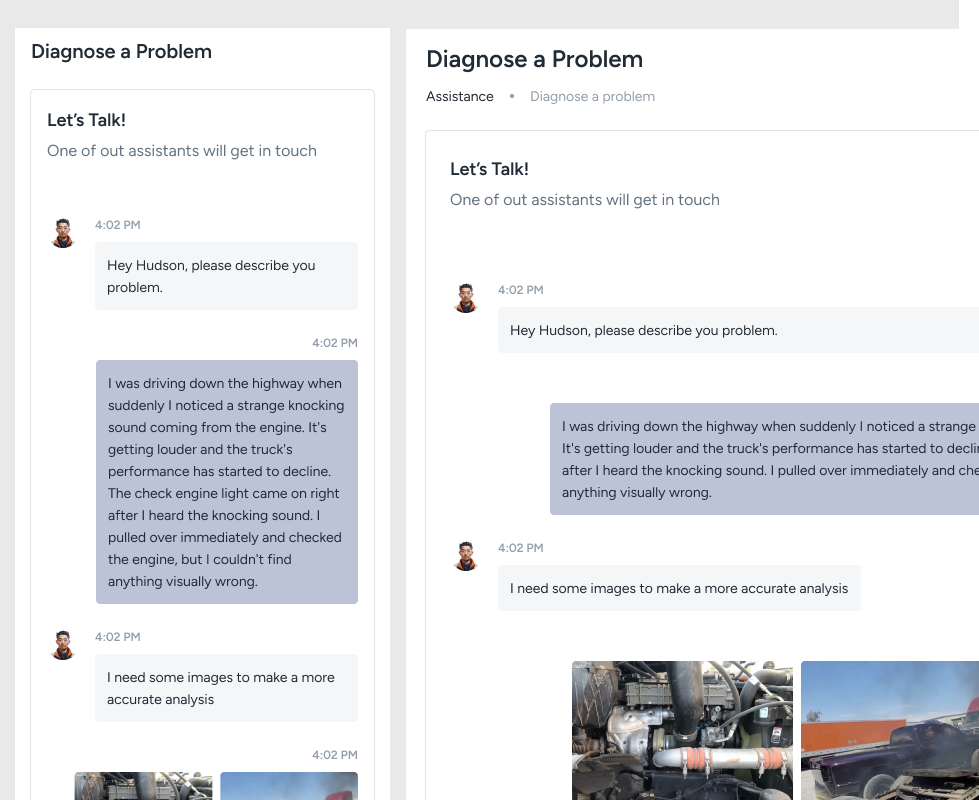
An AI Chatbot backed up by human support can help direct the escalation process efficiently.
Leveraging an AI Chatbot in a truck repair application streamlines initial diagnostics and query processing, swiftly identifying common issues. When complex or ambiguous problems arise, the chatbot seamlessly escalates the query to human support, ensuring specialized expertise is engaged. This integrated approach guarantees rapid response times and personalized solutions, optimizing the truck repair experience.
Global Search with Auto-Complete Functionality
Recognizing the diverse challenges and the vast information landscape within the truck repair domain, I prioritized the implementation of a global search feature. This powerful search tool allows users to quickly access specific information or solutions within the platform. To enhance the user experience, I integrated an auto-complete functionality. As users begin to type, the system suggests relevant terms or phrases based on their input, ensuring they can swiftly locate pertinent information. The auto-complete suggestions are designed with error tolerance for common typos and industry-specific jargon, ensuring a seamless search experience. This decision not only empowers users by putting comprehensive information at their fingertips but also minimizes time spent searching, aiding in quicker problem resolution.

Showcase
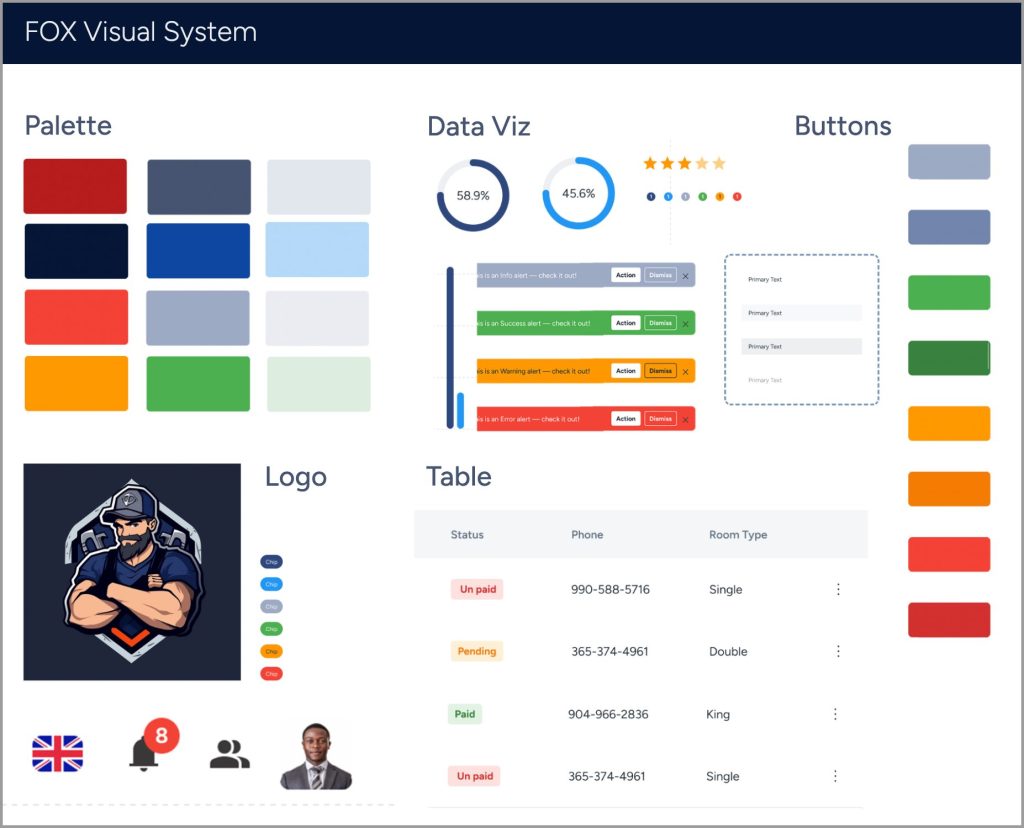
Quality assurance from mobile to desktop: To ensure quality assurance, I implemented a process that involved scheduling design QA sessions with engineers. Following the completion of each experience, I would then arrange design reviews. Subsequently, a more comprehensive review was conducted, during which I identified and documented any visual bugs. This document/list was then provided to the engineers for resolution. Once all design bugs were addressed, I would provide my approval, sign off on the code, and deem it ready for shipping.

Reflections
User-Centric Design is Crucial
Immersing myself in the Interstate trucker ecosystem reinforced the importance of deeply understanding user needs and preferences. Engaging directly with mechanics, drivers, and fleet managers provided invaluable insights that guided my design decisions.
Simplicity Amplifies Efficiency
Introducing features like the global search with auto-complete showed me the profound impact of simplifying complex tasks. What might seem like a straightforward tool can profoundly elevate the user experience by providing quick and relevant information.
Team Synergy is a Game-Changer
Collaborating intensively with Engineers and PMs reiterated the value of interdisciplinary teamwork. Ensuring synchronization between design and development from the get-go facilitated smoother transitions, fewer roadblocks, and a more cohesive end product.