
Truck Repair On-the-Road Application
The end result : the FIGMA | React Interface
Project
I designed and prototyped the first version of a truck repair platform for an Atlanta-based startup. From April to June 2018, I established the design system, iterated the product structure, and refined several design versions. Mainly targeting the Interstate trucker ecosystem, I designed the app for desktop, tablet, and mobile. As planned, the app will be launched by the end of January.
Context
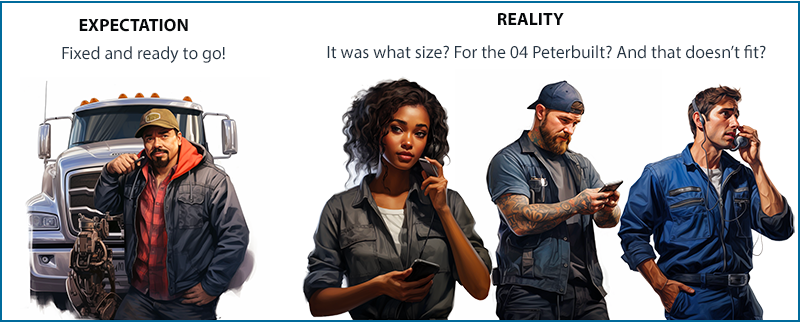
Unnecessary mechanical problems with semi-trucks annually lead to significant downtime and financial losses estimated at over 1.1 billion annually. When a truck breaks down, owner-operators may need more knowledge of the mechanical issues with their vehicle, the trailer, or the load. In remote regions, it can be very time-consuming to diagnose a problem and then find the correct mechanical expertise to address the problem the first time.
My client decided this presented an opportunity and wanted to dive deeper into the truck repair process. They hired me as the product designer of the team. First, we want to understand the entire process from start to finish with all of the user roles involved.
Process
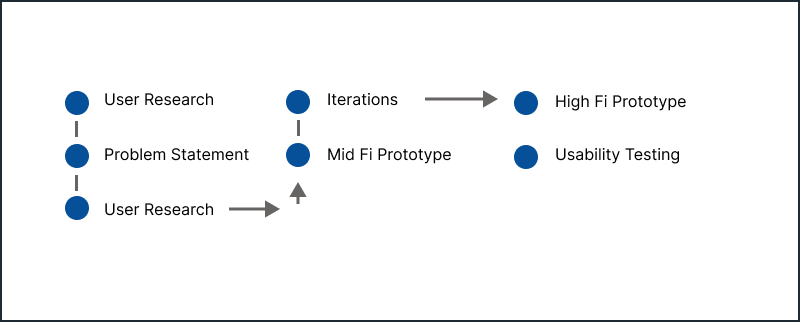
Discover, Define, Design, and Deliver
II followed the LUMA UX HCD process by first conducting user research. After synthesizing inspiring insights from survey and interviews, we defined the problem and jumped right into the ideation phase. From wireframes and ideation into fidelity prototypes, we incrementally created the application versions.
Research
Stakeholder Mapping: This helps identify everyone involved in the repair process, from the owner-operator to the maintenance crew, managers, parts suppliers, and even the end customers waiting for deliveries.
Ethnographic Study: I spent time observing and interviewing mechanics, drivers, and fleet managers to understand the challenges and needs they face during the repair process.
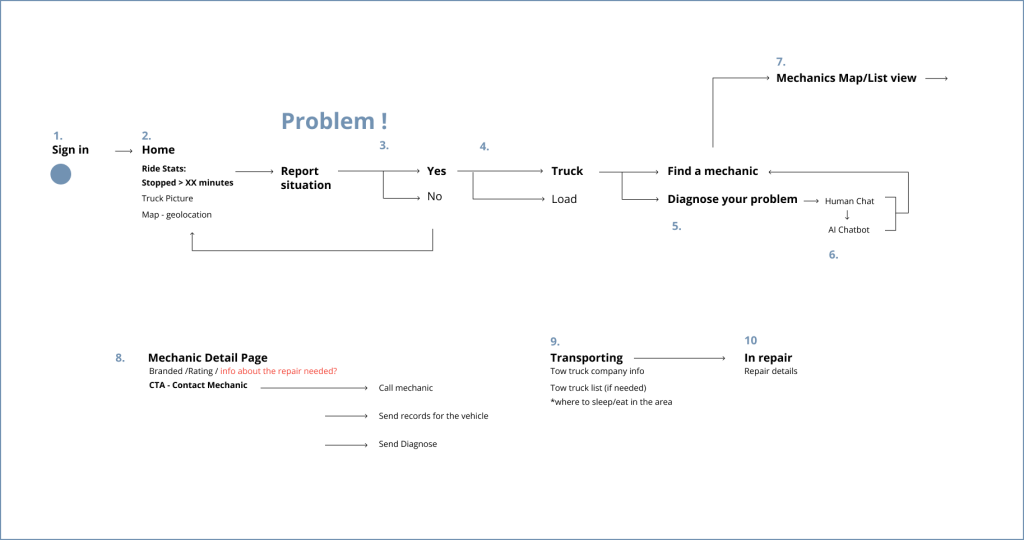
Experience Diagramming: UX Experience Diagramming for my application provides a visual representation of a driver’s interaction with the app, highlighting potential areas for intuitive design and efficiency. Given truckers’ unique needs, this process ensures the app offers clear information with minimal distractions and is optimized for quick, on-the-go actions.
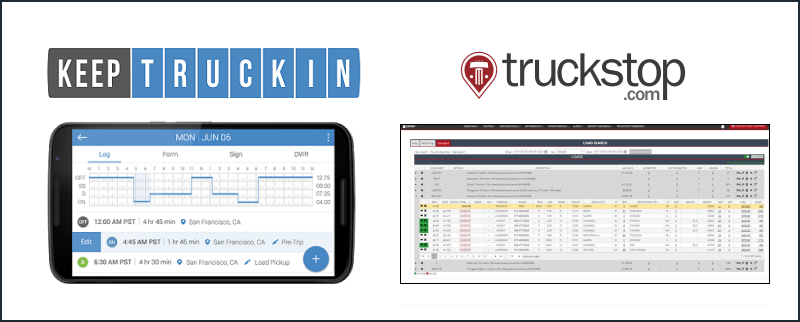
Competitive Analysis: I evaluated existing trucker applications in the market, identified their strengths and weaknesses, and derived insights that will inform the design and functionality of my app. I looked at transportation apps in the following categories: Communication and Dispatch, Load Boards and Freight Matching, Electronic Logging Devices (ELD), Fuel Management and Optimization, Maintenance and Repair Logs, and Tire Management.
Design Problems
1) Seventeen percent of truck problems are relatively minor and could be fixed by the owner-operator with expert instruction.
Basic issues like Air Leaks, Fuel Hoses, and Battery problems can all be addressed without a trained mechanic. In addition, oil, coolant, or other fluids can easily be adjusted. According to studies in Heavy Duty Trucking (HDT) Magazine, many of these problems are improperly diagnosed and require expensive and time-consuming on-site visits from truck mechanics.
2) Truck repair data is challenging to use on mobile phones and for non-native English speakers.
Truckers use various devices, from personal laptops to look up information to mobile devices to take pictures of problems for mechanical advice. Moving between devices and systems is expensive, and essential repair data may only sometimes be logged. Condensing this information into a single system that moves from desktop to mobile is essential. The US – Mexican border is one of the most trafficked in the world. Helping native Spanish speakers understand the repair process can significantly improve efficiency.
3) Repair processes should be quickly escalated from the owner-operator to on-site service, and if all else fails, the truck should be brought to a certified garage.
Each step in the repair process becomes more expensive as issues escalate. The first line of defense is the owner-operator, who will try to address the problem themselves. If the owner-operator cannot address the problem, a mechanic will be dispatched to the site with parts. The final step is to bring all or part of the tractor-trailer in for repairs. Correctly diagnosing the problem and using the correct procedure or expertise is the key to a fast and cost-effective system.
Design Goals
How might we help owner-operators find the most immediate mechanical expertise to reduce the time and cost of repairs?
Based on the research, there is a significant logistical gap between a mechanical problem with a semi and the expertise required to fix the problem. Currently, owner-operators need help to properly assess a repair and find the nearest cost-effective solution for that repair.
Design Decisions
Responsive, localization, and accessibility should be prioritized
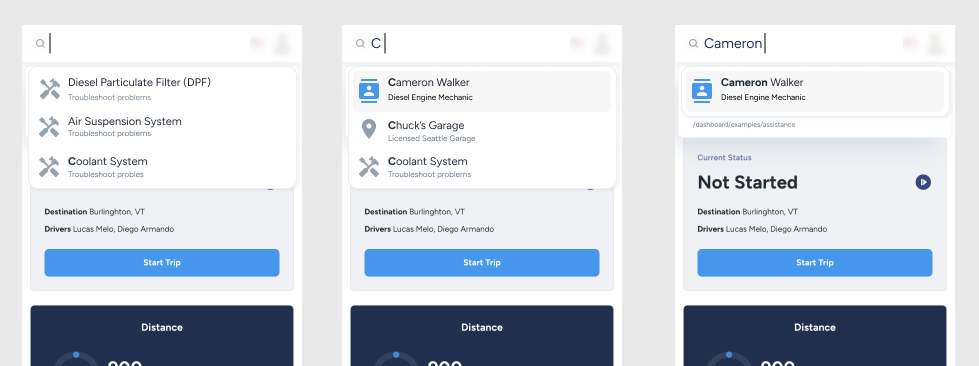
1) An intuitive auto-complete search can condense much of the confusion
Ensure fast, responsive, and relevant auto-complete suggestions with error tolerance for typos and optimize desktop and mobile interfaces with user-friendly navigation and precise categorization. Continually refine the system using feedback loops, analytics, and usability testing to maintain accuracy and user satisfaction.
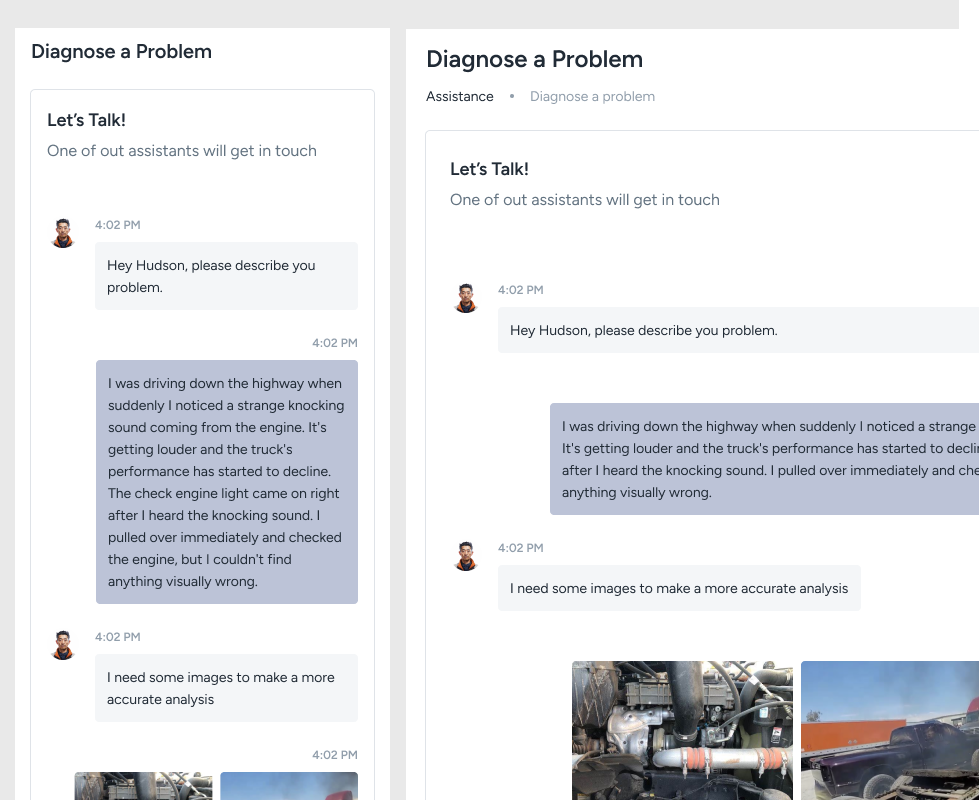
2) An AI Chatbot backed up by human support can help direct the escalation process efficiently.
Leveraging an AI Chatbot in a truck repair application streamlines initial diagnostics and query processing, swiftly identifying common issues. When complex or ambiguous problems arise, the chatbot seamlessly escalates the query to human support, ensuring specialized expertise is engaged. This integrated approach guarantees rapid response times and personalized solutions, optimizing the truck repair experience.
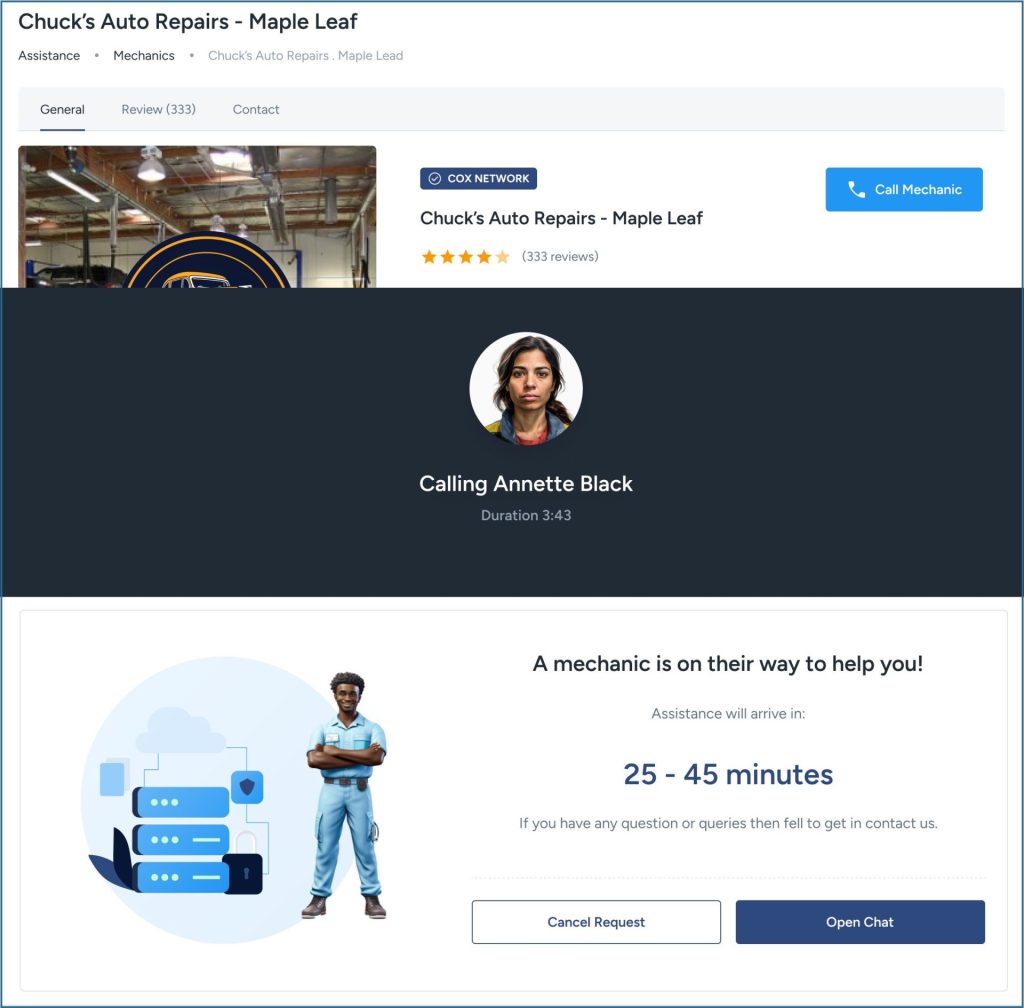
3) The connection between the owner-operator and the RIGHT mechanic is paramount for cost savings
An advanced system for finding and communicating with a qualified mechanic is key to success. Suggested mechanics need to understand the problem and communicate with the driver every step of the way.
Showcase
Quality assurance from mobile to desktop
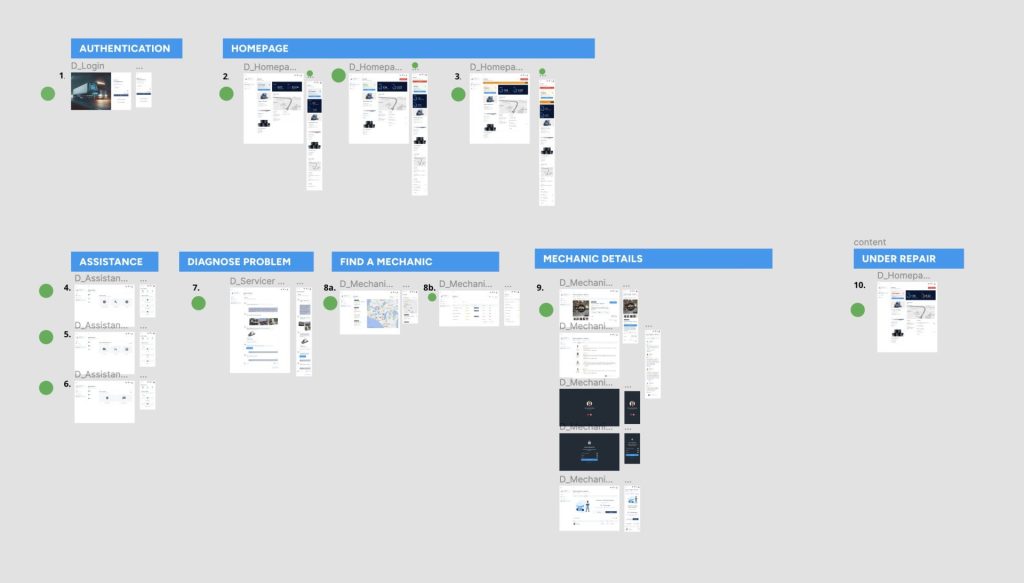
To ensure quality assurance, I implemented a process that involved scheduling design QA sessions with engineers. Following the completion of each experience, I would then arrange design reviews. Subsequently, a more comprehensive review was conducted, during which I identified and documented any visual bugs. This document/list was then provided to the engineers for resolution. Once all design bugs were addressed, I would provide my approval, sign off on the code, and deem it ready for shipping.
Reflections
Concentrate on what counts.
Dashboard-based applications are widespread these days, as are mobile-first designs in dashboards. Most of this part was relatively straightforward. The most significant UX impact was the auto-complete search and the dialog flow for the Generative AI. The generative AI piece can increase in value.
Initial organization across the team drives success
I found myself directly working with Engineers and PMs. Keeping the design library and the front-end framework synchronized immediately greatly improved the end product. My interactions with the PM were smooth because we had a plan. Through these exchanges, I honed my ability to articulate my design reasoning. Moreover, I recognized that transparent and efficient communication can inspire the team and steer the project toward a more positive trajectory.
The end result : the FIGMA | the PRODUCT